Food Allergy Basics
Listen Now
What is a food allergy?
- Food allergy is an immune system reaction to a food.
- A food allergen is a food that causes an allergic reaction.
- When the food allergen is eaten by someone who is allergic to it, their immune system releases large amounts of chemicals that trigger symptoms. The symptoms can affect their lungs, heart, skin and gut.
- Allergic reactions to food can be mild to moderate, or severe.
- Severe, life-threatening allergic reactions are called anaphylaxis.
Go to the how allergies work page to learn more about how allergies develop.
How common is food allergy?
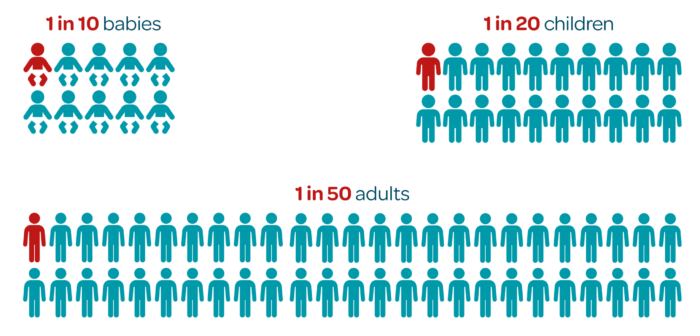
In Australia, about 1 in 10 babies, 1 in 20 children and 1 in 50 adults have food allergy.
Which foods cause allergic reactions?
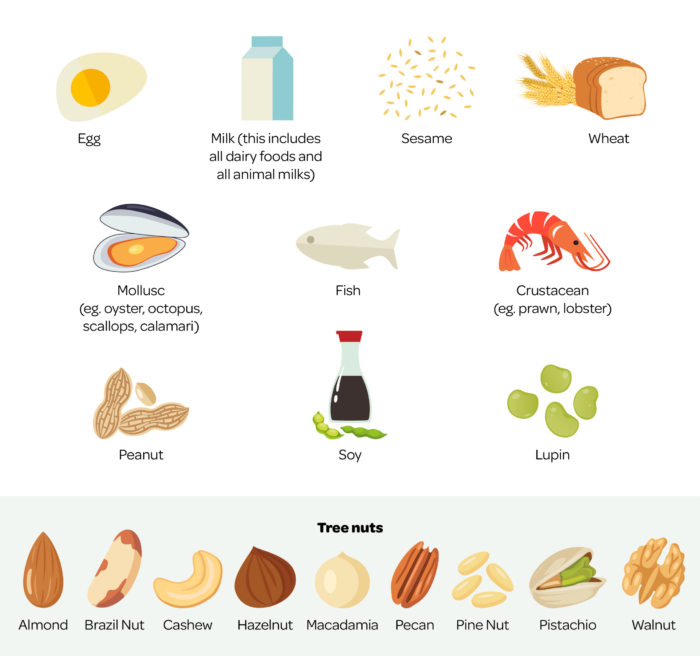
The common allergy causing foods are peanut, tree nuts, egg, milk (dairy), sesame, fish, crustacea, mollusc, soy, wheat and lupin.
However, any food can cause an allergic reaction.
There is no cure for a food allergy. To prevent having a reaction, people with food allergy must avoid the food or foods they are allergic to. Reactions can happen to very small amounts of a food – even a crumb or drop of food can cause an allergic reaction!
Is a food intolerance the same as a food allergy?
No. A food intolerance and a food allergy are different.
A food allergy involves the immune system, whereas a food intolerance does not involve the immune system.
Allergic reactions to foods can be serious and an ambulance is often called.
A food intolerance usually happens because the person cannot digest a food properly. Food intolerances can make people feel sick, but they are not life-threatening.
Sharing food and drinks
Growing up with food allergy, you will have been taught not to accept food from other people. With packaged food you can check the ingredients, but for food that is not packaged, it is hard to know what ingredients have been used and if it could contain the food you are allergic to. It is best not to share food when you have a food allergy.
It is the same when someone offers you a drink. If you are not sure what is in a drink (for example, you cannot read the label) – don’t drink it.
Do not share cups or drink bottles because someone may have eaten the food you are allergic to and contaminated the drink.
Signs and symptoms of an allergic reaction to foods
Allergic reactions to food can be mild to moderate, or severe. Anaphylaxis is the most severe type of an allergic reaction and is life-threatening.
Go to the signs and symptoms page to learn more.
Treating anaphylaxis
Anaphylaxis needs quick treatment with an adrenaline (epinephrine) device.
ASCIA Action Plans provide information about when and how to give adrenaline.
There are different adrenaline devices available in Australia. All adrenaline devices contain a single fixed dose of adrenaline. There is a different ASCIA Action Plan for each device because they are administered differently. ASCIA Action Plans have instructions on how to manage an allergic reaction.
Always keep your ASCIA Action Plan with your adrenaline device.
Go to the adrenaline devices page to learn more.